Young Leaves, Timeless Roots
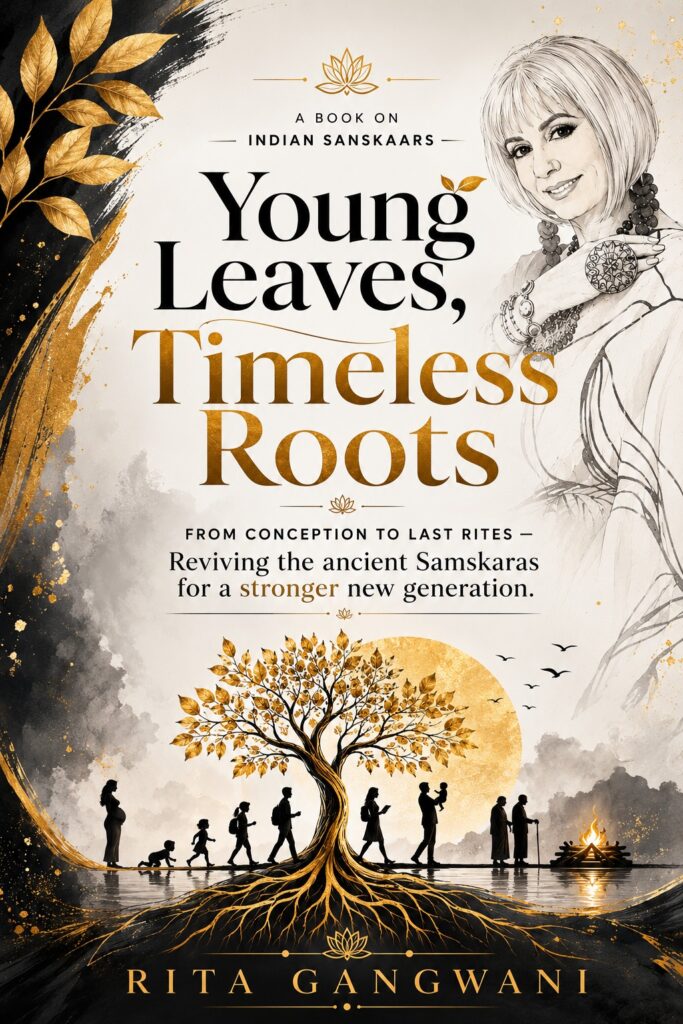
A journey back to our values — not to live in the past, but to carry its wisdom into the future.
There comes a time when we must ask ourselves a simple question: In becoming citizens of the world, are we slowly forgetting where we come from?
Today’s young generation is confident, ambitious, technologically connected and wonderfully global. They dream bigger, travel farther and question more than perhaps any generation before them. And that is something to celebrate. Yet, through my many years of working closely with young people, I began to notice another reality.
They knew how to perform many of our traditions — but often did not know why.
Why do we fold our hands in Namaste? Why do we touch the feet of our elders? Why is a child’s naming ceremony considered so significant? Why did Indian tradition mark the beginning of education with a sanskar? Why do we light a diya, perform an aarti or observe particular rituals at different stages of life?
Somewhere along the way, the ritual remained, but the conversation behind it began to disappear.
That thought became the seed of Young Leaves, Timeless Roots.
For me, this book is not merely about customs and ceremonies. It is about identity, values and understanding. It is an attempt to create a bridge between generations — between the wisdom our elders inherited and the questioning, curious minds of today.
I do not believe our young people should be told, “Do this because we have always done it.” They deserve more than that.
They deserve to know the meaning.
They deserve to ask questions.
And they deserve answers that help them decide what they wish to carry forward.
That is why the philosophy behind this book is simple:
Understand before you follow.
Question before you dismiss.
Discover before you forget.
The book travels through the important Indian sanskars that accompany the human journey — from conception and birth to childhood, education, marriage, the later stages of life and finally the rites surrounding death. It also looks at many of the everyday traditions and practices that we have grown up seeing around us, yet rarely stop to understand.
But beneath every ritual lies something much larger.
A sanskar is not simply what happens during a ceremony. Sanskars reveal themselves in the way we live.
They are present in the way we treat our parents when they grow older. In how we speak to someone who can do nothing for us. In our respect for food, knowledge, nature and relationships. In our willingness to accept responsibility when we make a mistake. And perhaps most importantly, in how we conduct ourselves when nobody is watching.
That is where values truly live.
My own journey has made this book deeply personal. Before becoming an author, personality development trainer and international pageant coach, I had the privilege of serving my country as an officer in the Military Nursing Service of the Indian Armed Forces. After retirement, my uniform changed, but my desire to serve did not.
I continued working with young people from very different backgrounds — students, aspiring professionals, pageant contestants, underprivileged children, autistic young people, prison inmates and those who simply needed someone to remind them of their own potential.
For years, I have taught personality development, confidence, communication, grooming and presence. But gradually I realised that there is another dimension of personality that cannot be created through clothes, posture or communication skills alone.
It is character.
The world may first notice our surat — our appearance — but ultimately it remembers our seerat: who we are within.
And our roots have an important role in shaping that inner person.
This is why I called the book Young Leaves, Timeless Roots.
Young leaves should grow. They should reach towards new skies, experience new worlds and find their own direction. Roots are not meant to hold them back.
Roots are what allow them to rise without losing themselves.
My dream for this book goes far beyond its pages. I hope it reaches young people in India and Indians living thousands of miles away from home. I hope parents read it with their children and grandparents discuss it with their grandchildren. I hope it finds a place in schools, colleges, libraries and homes.
Most of all, I hope it begins conversations.
Because traditions survive not when they are imposed, but when they are understood.
If this book inspires even one young person to pause before dismissing a tradition, ask their grandparents a question, discover the meaning behind a ritual, or simply say with greater understanding and pride, “I know my India,” then this journey will have been worthwhile.
We do not have to choose between being modern and being rooted.
We can be both.
We can belong to the world — and still carry India within us.
Young Leaves, Timeless Roots is my invitation to a new generation:
Grow. Question. Explore. Fly. But know the roots that gave you wings.
— Rita Gangwani
Author | Personality Development Trainer | International Pageant Coach | Former Officer, MNS, Indian Armed Forces