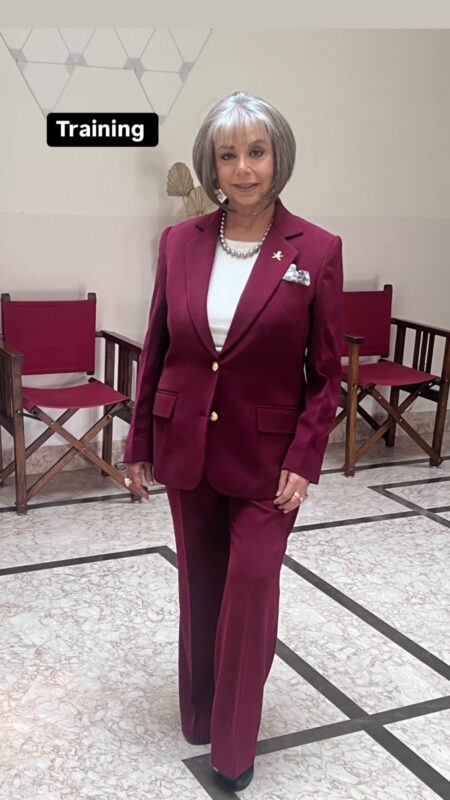
Rita Gangwani is a leading personality transformation mentor, executive coach, corporate trainer, pageant coach, author and motivational speaker, dedicated to helping people become confident, polished, powerful and purpose-driven versions of themselves.
Her work begins with personality transformation. She helps individuals refine their confidence, communication, body language, etiquette, grooming, public speaking, leadership presence and self-image. Whether working with professionals, students, leaders, pageant aspirants or individuals seeking personal growth, Rita’s approach focuses on building both inner strength and outer impact.
As an executive coach and corporate trainer, Rita has trained professionals and students at some of the top management institutes in the country, helping them develop executive presence, professional grooming, confident communication, leadership skills and the ability to create a lasting impression in personal and professional spaces.
She is also the founder of RIGAHAUS and one of India’s most respected names in pageantry and grooming. Rita Gangwani is the only pageant coach to have been honoured by the World Book of Records for coaching diverse beauty pageant aspirants across categories including Miss, Mrs, Mr, Teens, Pre Teens, Empress, Classics, Petite, Transgender, Plus Size, Deaf, Blind, Wheelchair, Cancer Survivors, Kids, Toddlers and many more. Her contribution has been recognised through several prestigious national and international awards.
Rita is also the only Indian pageant coach to have authored a bestselling pageant book, Beauty Pageants Greenroom, with a foreword by former Miss Universe Sushmita Sen. The book has become a powerful guide for aspirants who wish to understand the world of pageantry with clarity, confidence and preparation.
A former officer from the Indian Armed Forces, Rita brings discipline, dignity, grace and leadership into her mentoring. She is also a State and National pageant winner, having won Himachal Queen 1982 and Mrs. Supreme Universe 2019. Her journey reflects her own powerful belief: “Be a stiletto in a room full of flats.”
Known lovingly by her students as “GURUCOOL”, Rita is admired not only for her expertise, but also for her kindness, generosity and deep commitment to empowering others. During the lockdown, she digitally helped hundreds of personality development and pageant enthusiasts learn essential skills free of cost under Vidya Daan. She continues to support workshops for the underprivileged, carrying forward her mission of making confidence, grooming and transformation accessible to all.
Through RIGAHAUS, Rita Gangwani continues to inspire individuals, professionals, students, leaders and pageant dreamers to rise with confidence, grace and purpose. Her mission is simple yet powerful: to help every person transform their personality, discover their highest potential and walk into the world with presence, polish and self-belief.
The interview room—where titles are truly won or lost…..The takeaway: There are no wrong answers if they’re spoken with clarity, purpose, and a touch of authenticity.
Feeling nervous about whether your answers will impress the judges? You’re not alone. The unpredictability of interview questions can feel overwhelming. You can rehearse a thousand times and still not guess the exact questions or sequence you’ll face. But here’s the good news:
There are few powerful strategies you can control to leave a lasting impression and walk out feeling like a queen.
🔸 Dress to express, not impress.: Your interview outfit should be an extension of your personality. It’s your silent introduction before you even speak a word. Choose something that complements your character, boosts your confidence, and flatters your features. Let your outfit narrate your story.
🔸 Look like your headshot—exactly.: The moment you walk into the room, judges will subconsciously match your face to the headshot they’ve been studying. If you look drastically different—whether due to lighting, editing, or styling—it creates a subtle disconnect. It may even lead to the unconscious thought: “Did she mislead us?”Avoid starting your interview on shaky ground. Choose a headshot that truly reflects how you look on a normal day—not necessarily your most glamorous photo. Then replicate that same look for the interview. Familiarity builds instant trust.
🔸Show self-awareness
When asked about weaknesses, avoid vague or cliché answers. Instead, name a real challenge and explain the steps you’re taking to grow
Example: “I used to struggle with being overly self-critical. To overcome that, I started celebrating small wins and practicing mindfulness—today, I channel that energy into learning rather than doubt.”
🔸 Perfect your elevator pitch. :Think of the elevator pitch as a short, sharp summary of your story. You have 30 seconds—like a short elevator ride—to answer common questions like:“Tell us about yourself” “What’s your platform?” “Why do you want to win this title?” “What sets you apart from the others?” Your answers should be crisp, engaging, and complete enough that no follow-up is needed. Practice them out loud until they flow naturally.
🔸 Know your paperwork inside-out.Whether it’s a resume, platform statement, or personal bio, your paperwork is the judge’s first impression of you—and often the basis of their questions. Don’t get caught off-guard by something you wrote! For example, if your form mentions you collect inspiring quotes, be ready to share one. Print your submission and review it thoroughly, especially in the moments before your interview.
🔸 Stand out by being thoughtfully bold.For qestions like “Why should the judges pick you?”, avoid vague platitudes. Instead, share your vision and how winning would help you achieve it “I bring a unique perspective as someone who grew up organizing community clean-ups. Winning this title would empower me to launch a national eco‑education campaign in schools—something I’ve already started locally.”
🔸 If you go blank—own it and move on! : Pageant interviews aren’t pass/fail exams—they’re windows into your personality. If you forget a prepared answer or draw a blank, don’t freeze. Just choose the first genuine response that comes to mind and build on it with confidence.One contestant once blanked on a question about which woman should be featured on Indian currency. Her mind suddenly thought of Kalpana Chawla. Not her usual answer, but she rolled with it—explaining why Kalpana symbolised courage and inspiration—and won the room with her conviction.
🔸Use a structured method for unfamiliar questions
Not every question is expected—stay calm, relate it to your values, and answer thoughtfully. Judges look for insight and clarity, not rehearsed perfection
: Pause and breathe. Restate or frame the question (“If I understand you’re asking…”). Share your view. Support with a personal story.
Below are the most commonly asked questions in beauty pageants and how to approach them like a queen.
1. “Tell us about yourself.”
Why it’s asked: To break the ice and see how well you know your own story.
How to answer: Think of this as a 20-second “elevator pitch.” Stay light, engaging, and personal. Highlight your passions, achievements, values, and community involvement. It’s your chance to show the judges who’s behind the sash.
Quick tip: Choose 3–5 defining aspects of who you are, and wrap it up with a personal belief or mission.
2. “What makes you, you?”
Also heard as: “What’s something unique about you?”
Why it’s asked: Judges want authenticity and individuality.
How to answer: Share a unique perspective, personal quirk, or life story that reflects your character. Let them see the heart beneath the glamour. Focus on your journey and how it’s shaping your future.
3. “Why should the judges choose you?”
Also heard as: “Why do you deserve to win?”
Why it’s asked: To assess self-awareness, confidence, and humility.
How to answer: Speak genuinely about your vision, what you stand for, and how the title would amplify your purpose. Avoid clichés. Show, don’t tell. Mention how your values align with the pageant’s mission and how you will contribute as a titleholder.
4. “Define feminism” / “What is the role of a modern woman?”
Why it’s asked: To explore your values and understanding of current gender issues.
How to answer: Speak from experience. Talk about empowerment, equality, and the qualities you admire in women today. Emphasize leadership, compassion, and inclusion.
5. “What’s one current issue you care deeply about?”
Also heard as: “What are your thoughts on [insert issue]?”
Why it’s asked: Judges want to see your awareness, opinions, and how you connect with the world.
How to answer: Choose an issue you genuinely care about. Stay informed, and connect your views to a personal story if possible. Focus on hope, unity, and action. Avoid generic answers.
6. “What’s your biggest weakness?”
Why it’s asked: To see your self-reflection and growth mindset.
How to answer: Choose a real trait, but show how you’re actively improving. For example: “I used to fear public speaking, but joining debate club helped me turn that fear into my strength.”
7. “Where do you see yourself in five years?”
Why it’s asked: To measure ambition, planning, and self-discipline.
How to answer: Describe a meaningful vision for your future—be it education, career, or advocacy. Judges want to know you have purpose, direction, and the drive to achieve your dreams.
8. “What’s one thing you love most about yourself?”
Why it’s asked: Confidence check!
How to answer: Share a strength with humility—something that reflects both your personality and your values. Maybe it’s resilience, empathy, leadership, or your ability to connect with people.
9. “What advice would you give your younger self?”
Why it’s asked: To reveal emotional growth and personal insight.
How to answer: Be sincere. Reflect on a challenge you overcame or a truth you wish you’d known earlier. This is your chance to inspire others while showing maturity.
10. “Who is your role model?”
Also heard as: “If you could meet any historical figure, who would it be and why?”
Why it’s asked: To learn about the qualities you admire and the values that shape you.
How to answer: Choose someone who genuinely inspires you. Explain what you’ve learned from them and how you apply that in your life. Bonus points for a personal anecdote or a witty twist!
11. “What’s the biggest problem in your community or country, and how would you solve it?”
Why it’s asked: To evaluate leadership potential and civic awareness.
How to answer: Tie the issue to your platform or passion. Propose a constructive solution. Be honest but optimistic, showing that you’re both informed and hopeful.
Pageant interviews are not about giving the “perfect” answer—they’re about giving your answer. Be bold, be kind, be you. When your voice reflects your heart, you won’t just impress the judges—you’ll inspire the world. Because the crown doesn’t just go to the most beautiful… it goes to the most prepared.
My Protected Post
This content is protected. Right-clicking and text selection are disabled to prevent copying.
What’s the Biggest fear of Human beings?? Heights? snakes? Death? …..NO!! you will be surprised to know that public speaking is the number one fear people face. The Personal Introduction competition seeks a speaker who does not hold such phobias and is confortable addressing the large gathering, because as a title holder you are expected to be a peoples, Person.
Usually offered as a required competition round in front of live jury and audience, personal intro is one of the only opportunities contestants have to speak to onstage in depth other than answering the jury’s questions.
When is it required?
Personal introduction usually occurs sometime before the personal interview. Contestants take turns introducing themselves on a microphone. Contestants deliver pre-written and pre-memorized speeches. Some write their own, others hire a coach like us to write one for them.
I always suggest that contestants should write their own introduction as the words pour out from their heart and they themselves know exactly how their life flows. In such cases even if they forget a point, they can always makeup or add something on stage, however, introduction written by others will have someone else’s thoughts and words which contestants memorize, its risky…because if u forget a point, it’s difficult to connect the next point. unfortunately, when Girls write themselves, they usually include more information than what is required of them to share, but more on that later!
What Judges are Looking For?
Judges are looking for a titleholder who is a confident public speaker with an interesting story. The goal of this competition is to make an impression and be remembered.
Some judges will create their personal interview questions from your personal introduction. therefore, be sure of what exactly you have written so that u don’t appear a fake when a point is brought up during the interview.
Practice ahead of time so you can deliver a performance you’re proud of.
How to Write Your Introduction in an impressive way.
I’ve personally won titles with introductions I wrote myself, so I know how possible it is to succeed as a DIY Queen! however, i do offer introduction writing service to those who are interested.
Even if you write your own, it never hurts to have a coach provide you with edits or help you to deliver it with proper voice modulation.
In the next following sections, we will discuss my process for writing a personal introduction the judges will remember.
Common Requirements
Nothing’s worse than crafting an introduction only to realize that it doesn’t accurately showcase your achievements.
First, make a list including every guideline given by your respective pageant. This includes time limits and any information that must be included in your introduction.
Here is an example of the requirements list for most pageants be it Miss, Mrs., Teen, Mr. or others.
Name
Hometown
Academics
Profession
Passion
Achievements
Values
Fun fact or aspiration
What’s your Why?
Time limit: depending on pageant to pageant- 30, 45 or 60 seconds
This step functions as a brainstorming technique and helps you generate content for your introduction. Without it, your introduction may seem unfocused.
Making it all about YOU!
Next, brainstorm a list of everything you feel has contributed to who you are today. There is no age range for this list, so include any experiences, fun facts, hobbies, or people who influenced you. Try to come up with 4+ things for this list.
I’ve been ice skating since I was 3 years old
I love to paint, dance or knit
I am a Bollywood movie buff
I was teased in middle school for wanting to be an astronaut
i was bullied for my skin color …. anything which can show your true personality.
Celebrating Your Accomplishments
Then, make a list of all of your achievements from the last three years. Don’t filter yourself in this list! It doesn’t matter how big or small the success is. This is a great place to put the reach of your platform or your volunteer hours. Try to come up with 5+ things for this list.
Here is the list I came up with:
i was the headgirl/ boy of my school
I’ve have performed a play in front of the president of India
I am a National Debate winner.
I am a 25k Marathon winner
I’m taking some of the hardest courses my school / college offers
i have played Tennis at state level and so forth.
Have Some Fun with this list.
Finally, you want to create a list of fun facts or unique things about you that you have yet to mention in the other lists. This can include your career goals, languages you know how to speak, hobbies, or things you enjoy learning. Try to come up with 3+ things for this list.
Here are some I thought of:
I love studying various languages.
I am an antique coin collector
I want to be a Theatre artist
I usually read fiction or self-help books
Communicating Your Personal Brand
In all speaking portions of competition, it’s important to convey your personal brand, or a focused picture of yourself, to the judges. This makes it easier for judges to learn about and remember you. This brand should be especially present in your personal introduction because of through-lines. Through Lines are the main themes or ideas that connect and define your story or message. They act like the “core threads”- important points of life!! that run through your introduction, helping it feel cohesive, memorable, and meaningful.
A through-line is a common theme or topic that is woven throughout the entirety of a speech, or in this case, your lists and personal introduction. You can create a through-line by circling, underlining, or highlighting bullet points that paint a similar picture.
Some common through-lines are creativity, women in hobbies, volunteering, and education in Advocacy. Your through-lines can also be character traits such as, passion, dedication, empathy, and kindness.
Don’t be afraid to make your own that fit your personality better. Try to create as many through-lines- (bullet or core points) as possible without repeating elements.
Pageant related
This platform gives us a voice
The inclusivity of this pageant is my biggest attraction
I use my experience to help others
Pageantry has helped me build confidence after being bullied
Creativity
I love to write
I’ve been an avid writer.
I like to read fiction books
Academics
I am a National Scholer with highest grades
I’m taking some of the hardest courses in my school
I’ve studied Sanskrit since 8th grade
I want to be a scientist/ IAS / Professor
Choosing What to Write About
From these through-lines, you will need to pick two of them to include in your introduction. You can choose based on the number of elements, what relates to the required information, or which you’re most excited to talk about in Interview.
For example, you can see that academics mean a great deal to you because it has the most elements. This through-line also contains some of your accomplishments and career aspirations. Above all, it contains information that u wants the judges to know.
The pageant through-line contains an element from the list of your background, accomplishments, and fun facts. This will help you present a more complete picture of myself to the judges in the short amount of time provided. It also contains my platform.
When it comes to selecting through-lines, there really is no correct answer. It comes down to branding and who you want to present yourself as. You will not be able to include everything in your personal introduction, so this method helps you narrow things down and share the most important aspects of your life.
By focusing the content of your personal introduction first, you are making the writing and editing a lot easier!
Writing Your First Rough Draft
In general, personal introductions use the following formula…
Each arrow is a transition sentence that smoothly connects the previous section to the next one.
Write the Closing statement First
You can easily hit two birds with one stone by writing your closing statement first. few examples:
“I am [Your Name], and I’m not just here to win a crown — I’m here to represent every woman who’s ever dared to dream.”
2. “From a small town to this grand stage, I carry every dream that once felt impossible — I am [Your Name], and I’m here to turn belief into reality.”
3. “They told me I couldn’t — so I did. I am [Your Name], and I shine not to be seen, but to light the way for others.”
4. “With resilience in my heart and purpose in my stride, I am [Your Name] — and I am here to lead, inspire, and rise.”
5. “Because when vision meets voice, change begins — I am [Your Name], and I stand for more than a crown.”
6. “Representing the proud state of Maharashtra, I am [Your Name], and I am ready to wear the crown with purpose and pride.”
The most common way pageant contestants include this information is through the concluding phrase, “Representing … , I am …”
Even if you don’t end up using this exact phrase, it is a great place to start. Write the phrase at the bottom of the page to remind yourself to include it or one similar to it.
Naturally, the elements and through-lines you choose should cover the fun facts and aspiration requirements, so you’ve already completed all of the required information!
Tackle the Opening Lines nicely.
The opening of your personal introduction should hook the judges and audience and set the tone for the rest of your speech. It also determines which through-line will come first.
It is very common to use a quote as an opening. I’d encourage you to steer away from this and opt for a fun, bold statement instead. Whether you use a quote or not, this first line should directly relate to an element so you can easily transition to one your through-lines.
If you’re unsure which through-line should come first, list a few opening lines for each one and pick the one that resonates with you the most. You can also choose the most memorable, unique, or impressive one.
Few examples:
“Once shy, once uncertain — today, I stand tall because I chose to believe in myself.”
“They say your name is your identity — but I believe your actions define your legacy.”
“I stand before you not as someone who had it easy, but as someone who never gave up.”
“I’m not here just to compete. I’m here to be heard, to be seen, and to make a difference.”
“From the heartland of [Your State], where tradition dances with dreams — I am proud to represent a legacy of strength and grace.”
“My story doesn’t begin on this stage — it began in a small corner of India, where dreams were bigger than circumstances.”
“They say first impressions matter — so allow me to make mine unforgettable.”
The Marathon of the Middle of the intro
If you haven’t already, you’ll need to rewrite your through-line elements as sentences. Remember, you are telling a story with your introduction, so it should read like one. Be sure to keep the audience and judges interested by playing around with different sentence structures.
Next, write transition sentences that connect one through-line to the next and the last through-line to the closing. You can do this by finding a common theme between the through-lines.
Transition sentences function as bridges in your personal introductions. Without them, the introduction may sound choppy and disconnected. Each through-line and transition contributes to the cohesive, greater picture that is your personal brand.
Few Examples:
1. From Background to Profession
“That curiosity led me to pursue…”
“This foundation shaped my decision to become…”
“Driven by those early lessons, I chose to build my path in…”
2. From Education to Passion
“While academics taught me structure, my heart found rhythm in…”
“Beyond the textbooks, I discovered my passion in…”
“That logical world helped me see the beauty in…”
3. From Personal Journey to Platform
“But what truly transformed me was…”
“My experiences opened my eyes to a cause larger than myself…”
“That journey made me realize the importance of…”
4. From Achievement to Purpose
“But titles don’t define me — my purpose does.”
“And with every step, I found myself closer to what truly mattered…”
“Yet, what fulfills me most is…”
5. From Past to Present
“Which brings me here today…”
“And now, standing on this stage, I carry every part of that journey…”
“All those moments have led me to this one…”
6. From Story to Closing
“Because I believe… we don’t just shine under the spotlight — we shine by being real.”
“That’s why I stand here… not just for a title, but for a purpose.”
“And this is just the beginning of what I hope will inspire many more…”
Edit and Polish Your Introduction for final Day.
Read it Out
At this point, you should have a complete introduction with an opening, closing, two through-lines, and all of the required information.
Before you proceed, you should read your introduction out loud. Don’t do anything special, just read it. By hearing the introduction, you’ll easily be able to catch grammar mistakes or repetitive phrases.
If there are any repeated words too close together (ex: using “amazing” in back-to-back sentences), replace them with different, more descriptive words.
Timing is the Key!
Next, read your introduction as you would if you were on stage or in front of a panel of judges. This will most likely be slower than you read it before. You may want to take pauses and place emphasis on certain words or ideas that you want the judges to remember.
Do this two times: the first time for practice and the second time for timing. If your introduction is over or just at the time limit, I would suggest cutting it down. This will allow you to take time to speak carefully and with passion without worrying about the bell.
Here are some guidelines with some of the most common time limits in pageantry:
Time Limit (seconds)
Recommended Introduction Length (seconds)
30
27
60
56
90
82
120
110
By giving yourself a few extra seconds, you provide yourself with a safety net. No one’s perfect, so you might forget a phrase, stumble over your words, or hesitate on stage. You never know what could happen! If any of these things do occur, you can be sure that you will stay within the time limit.
Even if you always deliver your personal introductions smoothly, you want to be sure you have time to scan the audience, the judges, and take pauses when necessary without feeling rushed.
What to Leave Out
When editing your introduction, you may feel like every single thing in your draft is important and deserves to be mentioned. Trust me, I know this feeling. It’s impossible to fit in all of your accomplishments, goals, and activities within this time frame, and that’s okay.
If your introduction is only a few seconds above the recommended length, try cutting out filler words, details that require too much context, or a sentence that gets too specific compared to the rest of your introduction.
If your introduction is over ten seconds above the recommended length, you need to reassess your the elements in your through-lines. Are all of these ideas connected? Are they scattered or more focused?
After the editing process, make sure your introduction contains complete thoughts that make sense and help you stand out. You should be completely happy with your written introduction before memorizing or perfecting delivery.
My advice:
This is the method I used to write my personal introductions at the state, national, and international levels. And the same has earned high scores for many of my students.
In this process, you learn more about yourself, how to organize your thoughts, and possible things to mention during interview. Introducing yourself is a vital skill in life, and I hope all of you take the time to practice doing so.
We offer introduction writing and delivery coaching. If you need help preparing for this competition or others, don’t hesitate to reach out to me on ritagangwani@hotmail.com